What editorial and art work actually means
Editorial and art is less about a specific act and more about a visual idea. A musician needs a cover image. An independent publication wants a portrait series. An artist wants a reference or a mood piece. A small brand wants a campaign that feels like a story rather than a product shot.
This category can include nudity, but it does not have to. It can be fully clothed, partially clothed, or artistic nude. The common thread is intention: the image is composed around a mood, a colour, a character, or a concept. The viewer should feel something, not just see a body.
It is a good category for creators who enjoy the creative side of the work: choosing a reference, building a colour palette, finding a location in their own home, and making an image that feels like theirs. It is also a good category for women who want to work without showing their face, because a strong silhouette or a turned-away portrait can carry an entire set.
What clients ask for
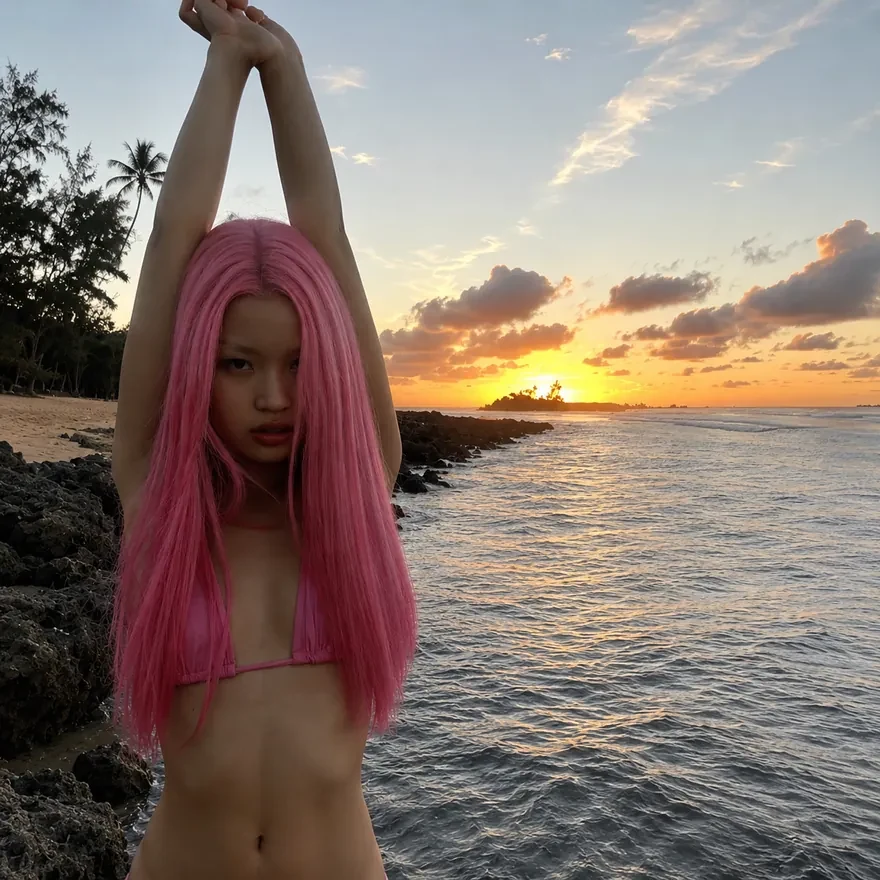
Briefs often begin with a reference image or a mood. “Warm sunset, pink hair, wide open sky, no direct eye contact” is a clear direction. “A dark bedroom, one lamp, a book, a quiet expression” is another. The client may want a specific colour, a film-like grain, a soft focus, or a clean minimal frame.
Some clients want a full set for a publication. Some want one hero image. Some want a series that tells a small story. Some want a portrait that matches an existing visual identity. The more specific the brief, the easier it is to deliver something that feels intentional.
You do not have to be a professional photographer to work in this category. You do need to understand what the client is asking for and be honest about what you can create with your phone, your space, and your light. A simple image done well is better than an ambitious image done badly.
What you actually need
You need a phone, a window or a lamp, a background that supports the mood, and a willingness to experiment. A piece of coloured fabric, a sheet, a plant, a mirror, or a single prop can change the whole frame. You do not need a studio. You need a point of view.
Look at the light before you look at the outfit. A pink sunset, a blue hour, a warm lamp, or a soft grey window all create a different feeling. Choose the light first, then choose the styling that belongs in it. That is how you make a phone photo look like an editorial image rather than a snapshot.
If the brief includes a specific colour or reference, do a test image before the full set. Send yourself the test and look at it on a different screen. What feels moody on your phone can look muddy on a laptop. A small adjustment to exposure or white balance can fix more than a new outfit.
How the process works
You apply with a regular photo and a short message about the kind of visual work you enjoy. If an editorial brief fits, Aurora sends you the mood, the references, the deliverable, the price, the deadline, and the usage terms. You can accept, decline, or ask for a change. If you accept, you create the images at home, deliver them privately, and receive 75% of the agreed fee after the client pays.
The 25% covers client acquisition, screening, negotiation, admin, hosting, payment processing, chargeback risk, and support. It is not a monthly fee. Read how client matching and the 75% split work for the full breakdown.
Privacy and boundaries in editorial work
An editorial image can be more revealing than it looks. A window, a skyline, a distinctive room, or a tattoo can identify you even if your face is hidden. If privacy matters, build a set of neutral locations and check the edges of every frame. A beautiful image is not worth a background that tells people where you live.
You can also decide how much of your body is part of the art. A portrait can be fully clothed, partially covered, or nude. The category does not require a specific level of exposure. The brief should say what the client needs, and you should say what you are willing to give.
If a client wants to publish the images, the brief should state where and for how long. If the client wants to edit them, say whether that is allowed. If the client wants to use them for something that was not in the brief, that is a new conversation. The privacy guide covers the practical layers.
Who this category suits
It suits adults who enjoy visual ideas, who are comfortable with creative direction, and who want to build a portfolio rather than only fill a request. It suits people who are willing to experiment with light, colour, and styling, and who can communicate about what they can realistically produce.
It does not suit anyone under 18. It does not suit someone who is being pressured, who needs guaranteed income, or who wants every brief to be explicit. It does not suit someone who is unwilling to take a test image or accept feedback. Editorial work is collaborative, and the collaboration is part of what the client is paying for.
Questions about editorial and art work
Do I need to be nude for editorial work?
No. Editorial can be fully clothed, partially clothed, or artistic nude. The brief and your limits decide. You can build a whole portfolio without full nudity.
Do I need professional lighting?
No. A window, a lamp, and a piece of fabric can create a strong mood. A professional light is useful only if you know how to shape it. Natural light is usually the best place to start.
Can I use my own creative ideas?
Yes. If you have a concept, say so in your application. A client may want a specific direction, but a creator with a point of view is more interesting to work with than someone who only follows instructions.
I run a private casting and project-matching service for adult creators. I write about the practical side of the work: money, privacy, boundaries, and the questions women ask before they decide.