What this category actually means
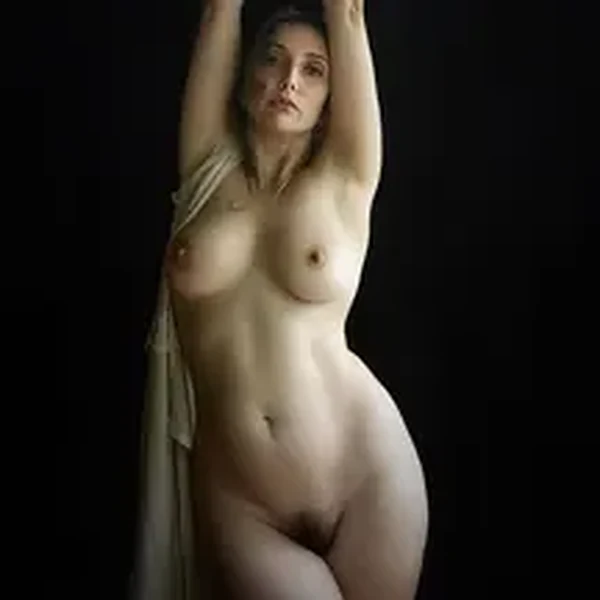
Artistic nude is a broad category. It can mean a fully nude portrait with dramatic light, a partially covered image where the suggestion matters more than the reveal, or a set that uses fabric, shadow, and angle to imply nudity without showing everything. The common thread is not a specific amount of skin. It is intention: the image is composed, not accidental.
The label “implied nude” is often misunderstood. It does not mean the image is less adult. It means the viewer is asked to imagine what is not shown. That can be more powerful than a direct image, and it can be easier for a creator who wants to keep certain parts private. You can build a whole category of work around what you choose not to reveal.
You do not have to decide today whether you are comfortable with full nude. You can start with implied, see how it feels, and change your mind later. A boundary can move in either direction. What matters is that the decision is yours, not a client's.
What clients ask for in this category
Clients come to artistic nude for different reasons. An artist may want a reference image or a mood piece. A private client may want a custom set with a specific lighting style. A photographer or small publication may want a body-positive editorial. A collector may want a limited set with a particular atmosphere.
The best briefs are specific about the feeling. “Soft window light, black and white, face turned away, no explicit detail” is a clear request. “Send nudes” is not a brief. It is a test of whether you will accept vagueness and then absorb the cost of guessing.
You can ask what the images are for, how long the client will use them, and whether they will be published. If the answer is evasive, decline. A serious client does not need to hide the purpose of the work.
What you actually need
You need a phone, a clean lens, a window, and a setting where you feel safe enough to relax. Some of the best artistic nude images are made in a bedroom, a bathroom, or a corner with a sheet and a chair. You do not need a studio. You do need to think about what is in the frame and what the light is doing.
Soft light is usually more forgiving than direct sun. A white curtain, a sheet, or a plain wall can simplify the background. A piece of fabric can be used to imply rather than reveal. If you want to show less, use shadow, crop, or a pose that covers the parts you want to keep private. If you want to show more, you still control the angle and the edit.
Take a few test images before you accept a brief. Look at them on a larger screen if you can. Check the edges, the background, and the parts of your body that you intended to show or hide. The image you send is the image the client will judge. Make sure it is one you can live with.
How the process works
You apply with a regular, non-explicit photo and a short message about what you are open to. If an artistic nude brief fits, Aurora sends you the brief, the price, the deadline, and the usage terms. You can accept, decline, or ask for a change. If you accept, you create the set at home and deliver it privately. The client pays, and you receive 75% of the agreed fee.
The 25% covers client acquisition, screening, negotiation, hosting, admin, payment processing, chargeback risk, and support. It is not a monthly fee. It is a share of the project only when a project happens. The full breakdown is in how client matching and the 75% split work.
Privacy and boundaries in nude work
Nude work raises the stakes on privacy. Your face, your tattoos, your room, and your body can all identify you. Before you create anything, decide what you are willing to show and what must stay out of the frame. A stage name, a no-face angle, a neutral background, and metadata removal are practical starting points. None of them is a guarantee.
You should also decide what happens if a client asks for more than the brief. The answer is simple: the brief is the brief. If he wants a different pose, a different level of nudity, or a different usage, that is a new conversation. You are allowed to say no, and you are allowed to stop a project even after you have started.
If you want to stay completely anonymous, this is not the right category. If you want to be careful and keep certain parts private, it can work. Read the privacy guide before you decide.
Who this category suits
It suits adults who are comfortable with their own body, who can hold a boundary, and who want to create images with a mood rather than a performance. It suits people who are willing to learn light and composition, and who understand that the client is buying a specific set, not unlimited access to them.
It does not suit anyone under 18. It does not suit someone who is being pressured, who is looking for guaranteed income, or who believes that a blur or a crop makes them completely invisible. It does not suit someone who wants to avoid the emotional work of seeing their own images online. That work is real, and it is part of the job.
Questions about artistic nude work
Do I have to be fully nude?
No. Implied nude, partial nude, and full artistic nude are different briefs. You can choose which ones you will consider and decline the rest. You can also change your mind between projects.
Can I keep my face out of the photos?
Yes. Many artistic nude briefs work without a face. Some clients will want a face, and you can decline those. If you choose no face, be consistent across the set so a single image does not undo the rest.
What if a client shares the images?
It can happen. The brief should state the permitted use, and you should keep a record of it. If content is published without consent, report it to the platform and send a written takedown request. No service can guarantee that images will never be copied.
I run a private casting and project-matching service for adult creators. I write about the practical side of the work: money, privacy, boundaries, and the questions women ask before they decide.